Northrop Grumman’s Pegasus Rocket Powers Mission to Extend NASA’s Swift Observatory
Northrop Grumman’s Pegasus Rocket Powers Mission to Extend NASA’s Swift Observatory
Air-launched rocket and Stargazer L-1011 aircraft deliver servicing satellite to challenging low-earth orbit
Summary
Northrop Grumman’s Pegasus rocket launched a mission to extend NASA’s Swift Observatory, demonstrating flexible, precise, responsive and cost-efficient satellite deployment supporting space exploration.
Key Takeaways
- Pegasus’ responsive air-launch capability enables rapid, global satellite deployment with reliable Orion motors powering all three stages since 1990.
- Pegasus exemplifies Northrop Grumman’s innovative, agile launch solutions supporting critical space missions worldwide.
CHANDLER, Ariz. – July 3, 2026 – Northrop Grumman Corporation (NYSE: NOC) launched Katalyst Space’s LINK spacecraft aboard a Pegasus rocket from the Kwajalein Atoll as part of NASA’s mission to extend the life of the Neil Gehrels Swift Observatory.
- Marking its 46th launch, the patented Pegasus air-launched system delivers unmatched flexibility, precision and cost-efficiency to meet the mission’s unique orbit and timeline.
- Built on decades of engineering excellence, Pegasus is designed for quick assembly, testing and launch, giving it an edge for time-sensitive missions.
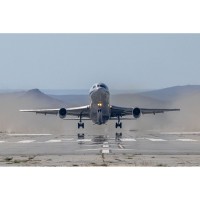
- The Pegasus rocket was carried to approximately 41,000 feet by Northrop Grumman’s Stargazer L-1011 aircraft, where it was released and ignited its first stage.

Wes Collier, vice president, launch systems, Northrop Grumman: “Ready for launch in under eight months, Pegasus is the go-to choice for missions that need to get off the ground now. Its air-launch design and proven Orion motors mean payloads can get to orbits that are harder for other rockets to reach.”
Details on Program:
Pegasus is a three-stage, small-class launch vehicle that has deployed nearly 100 satellites into low-Earth orbit since its debut in 1990 as the world’s first privately developed space launch vehicle. With its responsive air-launched design, Pegasus can operate from virtually anywhere on Earth with minimal ground support requirements, allowing the rocket to easily reach orbits that would be challenging for other launchers. Northrop Grumman’s Orion motors have provided reliable propulsion for all three stages of Pegasus.
The Swift Observatory was built at Northrop Grumman’s facility in Gilbert, Arizona. Originally intended for a two-year mission life when launched in 2004, Swift has gathered data that transcend its planned objectives for more than two decades. Operational support for the Swift mission is still provided by the company.
Northrop Grumman is a leading global aerospace and defense technology company. Our pioneering solutions equip our customers with the capabilities they need to connect and protect the world, and push the boundaries of human exploration across the universe. Driven by a shared purpose to solve our customers’ toughest problems, our employees define possible every day.
Northrop Grumman
-
Brigitte Sprague Media Contact
- July 16, 2026
- 949-750-7500
- Send Email
